
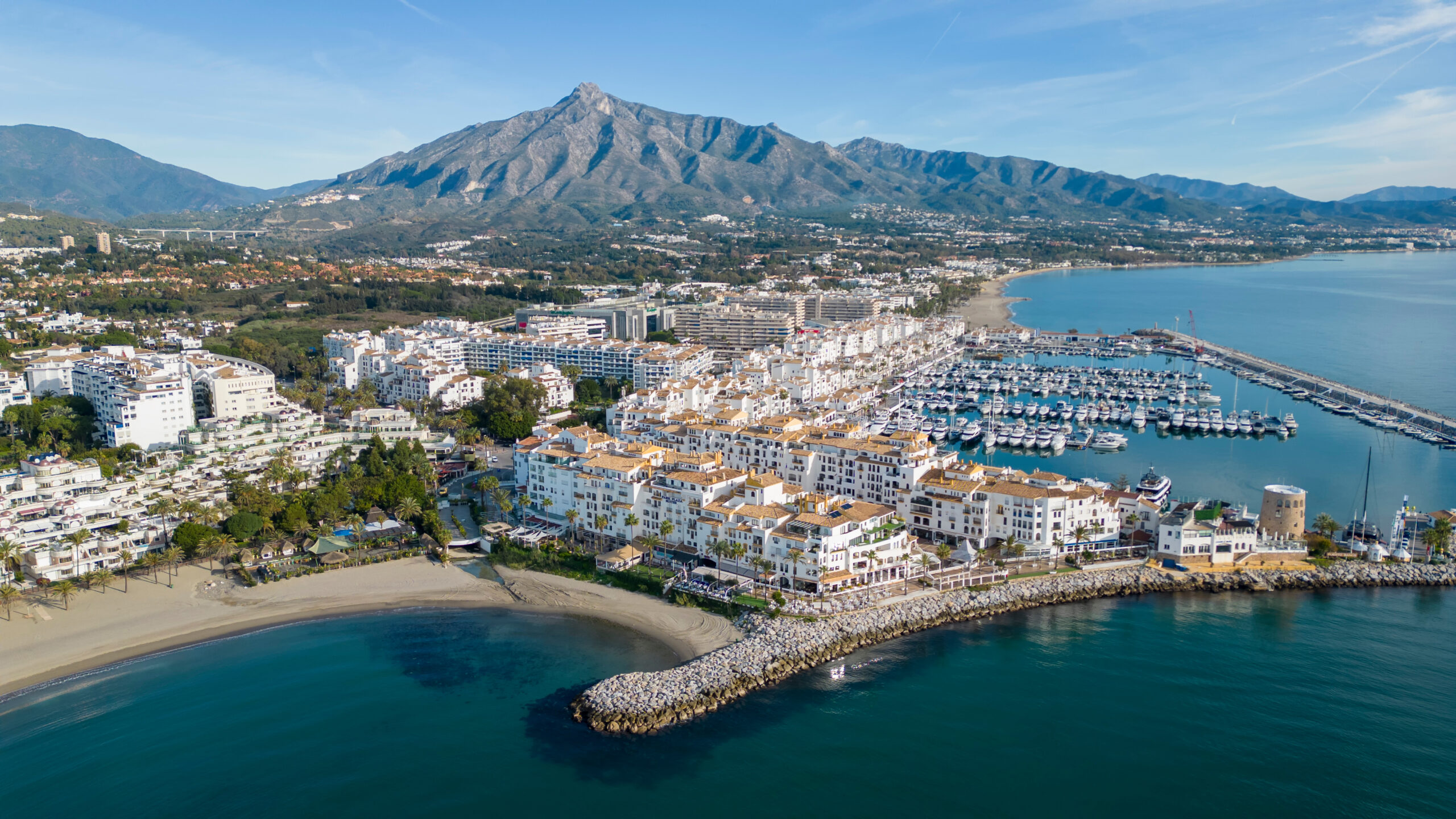
Marbella is one of the most popular cities in southern Spain, picturesquely located in the Andalusia region. Today, it is also one of the most famous holiday resorts on the Costa del Sol, attracting tourists with its unique microclimate. Marbella is primarily associated with beautiful beaches, luxurious residences, yachts, and exclusive hotels, and its history, dating back millennia, adds to its charm. Marbella’s transformation from a small fishing village into a prestigious tourist center is a fascinating story of dynamic development, social change, and economic evolution.
Marbella is a charming city located in the province of Malaga in Spanish Andalusia. Once a small fishing village, it is now a magnet for those seeking relaxation or dreaming of living in an exceptional place – between the majestic Sierra Blanca mountains and the azure waters of the Mediterranean Sea.
The Beginnings of Marbella: A Fishing and Farming Village
The history of this luxurious city on the Costa del Sol coast dates back to prehistoric times when the first people settled in the area. Over the centuries, these lands were inhabited by various civilizations. Real development began during Roman times, when Marbella, then known as Salduba, became an important commercial and industrial center. Remains from this period include the Roman Baths (Las Bóvedas) near San Pedro de Alcántara, the ruins of the Vega del Mar basilica, and the remains of a Roman villa (Villa Romana de Río Verde). The Roman bridge Puente Romano, connecting different parts of the city, is also an important element of the Roman historical infrastructure.
After the fall of the Roman Empire, Marbella came under the rule of the Visigoths, and then the Moors in the 8th century. It was they who contributed to its development, calling it “Marbil-la,” around which they built numerous fortifications and a castle (parts of which have survived to this day).
Reconquest by the Spanish and Difficult Years
In 1485, after many years of fighting, Marbella was conquered by the Catholic troops of Ferdinand II of Aragon and Isabella I of Castile during the Reconquista. The recapture of the lands by the Christians brought about changes in both the urban and social structure. The Moorish castle, known as Castillo de Marbella, was transformed, and the Church of St. Mary (Iglesia de Nuestra Señora de la Encarnación) was built in its place, illustrating the religious and social changes that occurred during this period.
The 19th Century: A Period of Industrial Transformation
At the turn of the 19th century, Marbella was full of changes – this period brought new opportunities to the Spanish pearl through the development of the mining industry. Deposits of iron and coal were discovered in the vicinity of the city, attracting investors and workers. The population grew, and Marbella began to develop economically. Despite industrial development, the city retained its rural character, and fishing and agriculture remained the main sources of livelihood for its inhabitants.
The 1950s: The Birth of a Resort
Marbella’s true transformation from a fishing village into a luxury resort began in the 1950s when Prince Alfonso de Hohenlohe-Langenburg recognized the potential of this picturesque location. Fascinated by its beauty and convenient location, he decided to transform it into an exclusive haven for European elites. In 1954, he opened the exclusive Marbella Club Hotel, which was the first establishment of its kind in the region and quickly became an icon of luxury.
The opening of this hotel attracted wealthy and famous guests from all over the world, contributing to the change in Marbella’s image. The city began to gain a reputation as an exclusive resort, which opened doors for investment in tourism infrastructure and construction. Since then, Marbella has become a place associated with a luxurious lifestyle and a popular holiday destination, contributing to its dynamic development in the following decades.
Marbella Today: A Symbol of True Prestige
Currently – located in southern Spain – Marbella is one of the most important tourist centers in the world, attracting millions of tourists every year, including celebrities. People looking for the perfect place for both relaxation and living. Marbella offers not only beautiful beaches (there are as many as 27 in the city) and hotels, but also a wide range of cultural, sports (including the best golf courses and unlimited water sports opportunities), and gastronomic attractions. While here, be sure to stroll through the charming streets of Marbella’s Old Town, and visit its local gems. These include the lively Orange Square (Plaza de los Naranjos), the promenade Avenida del Mar with sculptures by Salvador Dalí, the famous Golden Mile, one of the most popular addresses in the world, and beachside bars called chiringuitos. It is also important to mention the nearby Puerto Banús, a famous marina full of expensive yachts, luxury brand boutiques, and the most exclusive restaurants.
Marbella, with its rich history, has become a place where tradition meets modernity. On one hand, you can still feel the true spirit of Andalusia here, strolling through the charming streets of the old town, and on the other hand, immerse yourself in the cosmopolitan atmosphere of designer districts.
Is Marbella worth visiting? Absolutely. If only for its fascinating history, which is a story of constant change and adaptation. From a humble fishing village, through an important industrial center, to a luxurious resort – Marbella has evolved over the centuries, adapting to new conditions and needs. Today, it is a symbol of luxury and prestige, but also a place where one can enjoy a high quality of life. The city offers not only magnificent monuments and culture, but also a unique climate that attracts tourists and investors from all over the world. It is therefore not surprising that the real estate market in Marbella enjoys unflagging interest.